How to Raise Startup Funding | Why Selling Doesn't Exist: Jackie Vasudev H on Rethinking Sales
 The Daily Beat
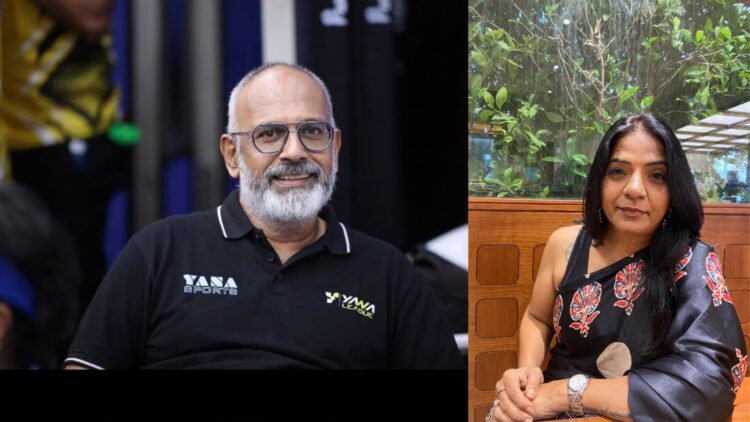
For entrepreneurs, sales is often treated as one of the most difficult parts of building a business. Startups develop products, invest in marketing, hire salespeople and then expect revenue to follow. Jackie Vasudev H challenges this conventional approach with a fundamentally different way of looking at the entire process. His philosophy is summed up in one striking statement: “There is no selling. There is only buying.” For Jackie, a sale is not primarily the result of persuasion, aggressive follow-ups or a salesperson's ability to close. It is the outcome of successfully understanding the gap between what a buyer wants or needs and what a business is offering, and then systematically bridging that gap until buying becomes a natural decision.
That philosophy begins much earlier than the traditional sales process. Jackie believes businesses often make the mistake of jumping straight into hiring salespeople or launching marketing campaigns before they have properly understood their market. His approach begins with scouting the ideal market, understanding the industry, geography and sector, identifying the relevant companies and people, and only then developing an Ideal Customer Profile. More importantly, assumptions need to be tested against the market itself. Customers provide feedback in many forms, and businesses need to collect that information and structure it through appropriate models and frameworks. This helps them understand what buyers will pay for, what they will not pay for, how and when they buy, and what triggers their decisions. Only after that understanding has been developed can a company properly position, package and present its offering in a way that aligns with the buyer. In that sense, sales becomes an outcome rather than an isolated business activity.
This is also why Jackie places significant responsibility on the founder during the early stages of a company. Instead of immediately handing sales over to a salesperson, he argues that the founder should personally acquire the first 20, 30, 40 or even 50 customers. The reason is not simply to generate early revenue, but to develop a direct understanding of the market, the customer and the gaps that need to be bridged. A founder who personally experiences those conversations develops knowledge that cannot easily be transferred through instructions or reports. Once the business understands those fundamentals, sales infrastructure can be built around them. Without that foundation, however, hiring a salesperson and expecting that person to solve the company's sales problem can simply move the responsibility without solving the underlying issue.
A major part of Jackie's thinking is the importance of visibility and follow-through. Businesses need to understand how buyers are interacting with the conditions they have created at every stage of the buying journey. Knowing that people visited a website, for example, is very different from understanding who visited, what they looked at and how they engaged. That visibility can provide the clarity required to determine what should happen next. Instead of randomly following up or repeatedly pushing a prospect, the business can respond to evidence of buyer behaviour and create the next appropriate condition. For Jackie, this is where a disciplined follow-through system becomes critical. The objective is not to force a buyer toward a decision, but to create the right sequence of conditions in which the buyer can recognise that the offering genuinely fulfils a need or want.
This way of thinking also changes how entrepreneurs should interpret failure. Jackie is critical of the tendency among some founders to blame the market after a business fails, particularly when significant capital and time have already been invested. A startup can raise substantial funding, operate for years and still fail, but simply saying that “the market was not ready” does not necessarily explain what happened. For Jackie, entrepreneurship demands accountability. Founders have to examine their own decisions, systems and behaviour rather than automatically placing responsibility outside the business. His broader message is that entrepreneurship is not about glorifying struggle or remaining stuck while calling it struggle. There is always work to be done, beginning with the entrepreneur, then moving through the business and its people.
Another important distinction in Jackie's approach is between selling and serving. He rejects the idea that service begins only after a customer has purchased. In his view, service begins with the very first interaction, and listening is a fundamental part of that service. When a business understands its customer and continuously creates value, the sale can become a natural consequence. Even after the customer buys, the relationship is not considered closed. Jackie describes the traditional idea of “closing the deal” as the wrong mindset because, once a customer has bought, the question should become what else the business can do to serve that customer. There is therefore no real closure; there is another opportunity to create value and continue the relationship.
His VPP model, standing for Value Provider, Problem Solver and Painkiller, adds another layer to this understanding. Jackie explains that the same product or service can be perceived differently depending on the condition of the buyer. Someone may see an offering simply as providing value, while another customer may have a problem requiring attention, and another may face a situation where an immediate solution is critical. Understanding where the buyer actually stands matters because businesses need to create the appropriate conditions rather than treating every customer and every situation in the same way. The model also reflects Jackie's emphasis on seriousness and precision in sales, where concepts and stages should be deliberately understood rather than used as interchangeable terminology.
This diagnostic approach eventually led Jackie toward the development of the 7S model: Scouting, Screening, Sketching, Strategizing, Solutioning, Synergizing and Seizing. The first six are activities undertaken by the business, while the seventh, Seizing, happens through the buyer's decision to purchase. The value of the model is that it allows a business to identify where a sales opportunity is actually breaking down instead of immediately blaming pricing, competition or the market. If a salesperson has not completed an earlier stage properly, a later pricing or negotiation issue may simply be a symptom rather than the real problem. Diagnostics therefore give founders and teams a common language for identifying what went wrong, who needs to address it and what needs to be improved.
Jackie's own journey toward this philosophy came through experience. After leaving his corporate career and starting a business in 2009, he experienced failure before returning to the startup ecosystem and continuing his work around sales. He observed the rapid development of sales technology, engagement platforms, enablement systems and CRM tools, but felt there was less attention on identifying the actual causes behind sales breakdowns. His interest in diagnostics was also influenced by the medical diagnostic approach he encountered while caring for his father, leading him to ask a simple but powerful question: what is actually causing the sales problem? After developing and testing his ideas, Jackie approached his longtime mentor and business coach Dr. Shri, and their thinking eventually came together to form Accelerate and the 7S model.
Ultimately, Jackie's perspective extends beyond sales technique. It is a philosophy about how businesses understand customers, how founders take responsibility and how organisations diagnose problems before attempting to fix them. Entrepreneurship, in his view, is also a form of practical leadership development because it forces people to make decisions, accept accountability and continuously confront reality. The central lesson remains straightforward: businesses do not create sustainable sales simply by pushing harder. They create the conditions in which buyers can clearly recognise value. When the gaps between buyer and seller are properly understood and bridged, buying becomes the natural outcome. There is no selling. There is only buying.
LinkedIn: https://www.linkedin.com/in/jackievh/