Mayaa SH Talks On COP30 Attendance And On Stating “I Would Rather Be A Character Actor Than The Hero”
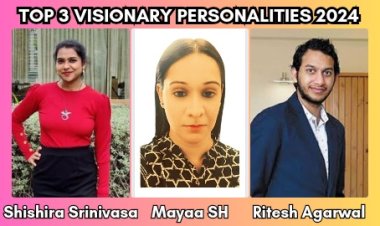
Mayaa SH, a prominent Indian authoress, activist, and public intellectual, expresses a preference for being a “Character actor more than the Hero” to highlight her dedication to impactful, behind-the-scenes work and her focus on collective empowerment over individual recognition. This philosophy underscores her multifaceted approach to social change, where she prioritizes addressing systemic issues and […] The post Mayaa SH Talks On COP30 Attendance And On Stating “I Would Rather Be A Character Actor Than The Hero” first appeared on HindustanMetro.com.
 The Daily Beat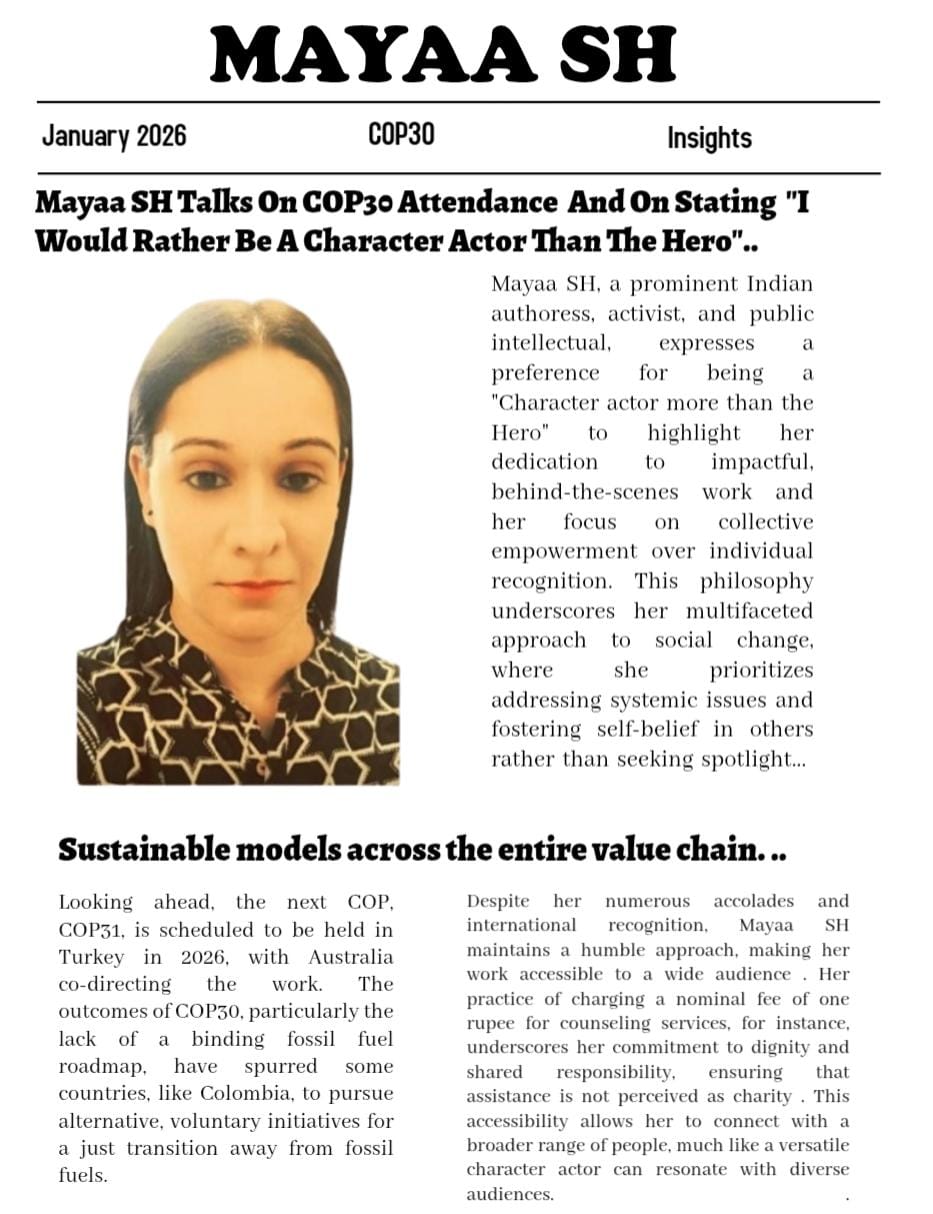
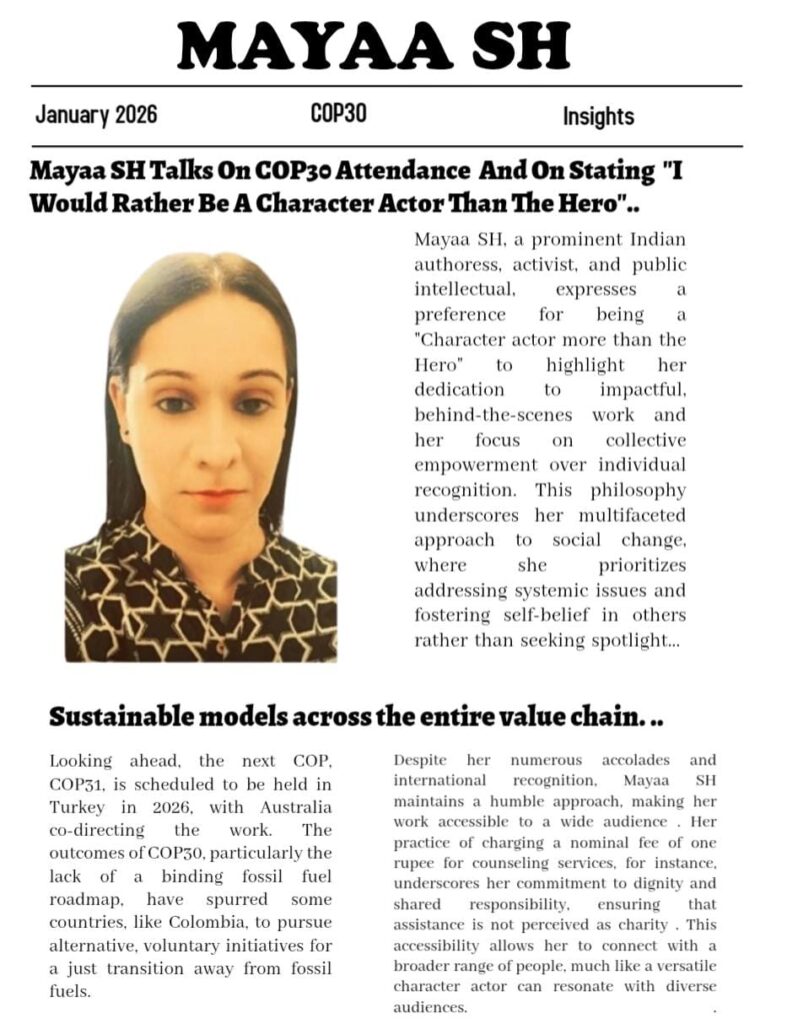
Mayaa SH, a prominent Indian authoress, activist, and public intellectual, expresses a preference for being a “Character actor more than the Hero” to highlight her dedication to impactful, behind-the-scenes work and her focus on collective empowerment over individual recognition. This philosophy underscores her multifaceted approach to social change, where she prioritizes addressing systemic issues and fostering self-belief in others rather than seeking the spotlight for herself
Mayaa SH’s statement reflects a strategic choice to operate as a catalyst for change, empowering individuals and communities from within, rather than adopting a conventional leadership role that might centralize attention on her .This approach aligns with her broader philosophy that true transformation requires collective effort and a deep understanding of societal nuances, which can often be better achieved through a supportive, enabling role rather than a dominant one .
Her “Character Actor” stance is evident in several aspects of her work:
Focus on Grassroots Empowerment:
Mayaa SH’s advocacy for women’s rights and mental health often involves working directly with individuals and marginalized communities. She provides counseling, support, and a platform for unheard voices, emphasizing that empowerment stems from within each person . This hands-on engagement, akin to a character actor who deeply understands and embodies their role, allows her to address specific challenges and foster genuine self-belief.
Challenging Traditional Power Structures:
By choosing a less prominent, yet deeply influential, role, Mayaa SH implicitly challenges patriarchal norms that often associate leadership with overt dominance and individual heroism . Her work aims to dismantle these structures by promoting gender equality and inclusivity, where every individual’s contribution is valued, much like every character’s role is crucial to a compelling narrative .
Emphasis on “Vichaar” (Self-Reflection):
Her “Theory of Slogan of Living by Vichaar” encourages individuals to engage in critical self-reflection and redefine their purpose. This internal process of empowerment, which she facilitates, is a foundational step towards collective action. As a “character actor,” she guides this introspection without imposing her own narrative, allowing others to discover their own strength.
Advocacy for Systemic Change:
Mayaa SH consistently highlights the need for legal and policy reforms, gender sensitivity education, and media responsibility to promote positive messages about women . Her efforts to influence these broader systems demonstrate a commitment to creating a supportive environment for all, rather than focusing solely on individual achievements.
Humility and Accessibility:
Despite her numerous accolades and international recognition, Mayaa SH maintains a humble approach, making her work accessible to a wide audience . Her practice of charging a nominal fee of one rupee for counseling services, for instance, underscores her commitment to dignity and shared responsibility, ensuring that assistance is not perceived as charity . This accessibility allows her to connect with a broader range of people, much like a versatile character actor can resonate with diverse audiences .
Promoting Collective Action and Inclusivity:
Mayaa SH believes that inspiring change requires collective action, where one woman’s dreams and achievements can create a ripple effect, encouraging others to pursue their ambitions . Her focus on gender inclusion, where all services and opportunities are open to everyone regardless of gender stereotypes, further exemplifies her “character actor” role in building a more equitable society .
In essence, Mayaa SH’s preference for being a “character actor” signifies her dedication to a more profound and sustainable form of empowerment. It reflects her belief that lasting change is achieved not through individual heroism, but through fostering self-belief, challenging systemic inequalities, and inspiring collective action from within communities .
COP30 – Health, migration and displacement in a changing climate Live Stream :
The COP30 high-level event webinar titled “Health, migration, and displacement in a changing climate: preparing health systems for the future” was co-organized by the WHO Special Initiative on Health and Migration, UN University, International Federation of Red Cross and Red Crescent Societies, and the World Federation of Public Health Associations. The event took place on November 12, 2025, from 09:00–10:00 (GMT-3) at the WHO Health Pavilion for in-person attendees registered for COP30 with Blue Zone access, and was also livestreamed globally for online participation .The event focused on the critical intersection of climate change, health, and human mobility, drawing on the latest evidence from the 7th WHO Global Evidence Review on Health and Migration . Discussions aimed to outline practical pathways for creating migrant-inclusive, climate-resilient health systems. Key areas of focus included integrating refugees, migrants, and displaced populations into universal health coverage and climate adaptation frameworks, advancing the Belém Health Action Plan with equity-centered approaches, and addressing social determinants of health through inclusive early warning and response systems that involve local health facilities, civil society, and migrant communities . The event was moderated by Dr. Revati Phalkey, Director of the International Institute for Global Health, United Nations University . Speakers included Dr. Santino Severoni from the World Health Organization, H.E. Dr. Qasem Buhaibeh, Minister of Public Health and Population, Yemen, Loyce Pace from the International Federation of Red Cross and Red Crescent Societies, Hannah Marcus from the World Federation of Public Health Associations, and Dr. Sri Hari Govind from the Migration Youth and Children Platform . The urgency of this topic is underscored by the fact that climate change displaced over 20 million people in 2023 due to sudden-onset weather events, with projections indicating that over 216 million people could be internally displaced by climate-related impacts by 2050 . Climate change also exacerbates food insecurity and the spread of vector-borne diseases, placing significant strain on health systems, particularly in low-resource settings .Financing a Just and Circular Future for Critical Energy Transition Minerals Ms Kavita Sachwani, PRB Implementation Coordinator.On November 11th 2025 ,this session provided governments, financial institutions, businesses, and civil society with practical insights to align financial flows and trade in critical energy transition minerals with sustainability, equity, and accountability principles — ensuring protection of the environment and people, particularly indigenous communities. The transition to a low-carbon energy future is not optional; it is the foundation of the global response to climate change. At the heart of this transformation lie critical energy transition minerals — essential for producing, storing, and using clean energy. Yet, meeting the rapidly rising demand for these minerals presents a dual challenge: while demand is surging, the prevailing mining models risk causing severe social and environmental harm.Addressing this tension requires a new approach, one that reduces demand through circular solutions and sustainable models across the entire value chain. This session will explore how guidance can be translated into action, highlight best practices and case studies, and examine the policies, mandates, and accountability frameworks needed to foster equitable finance in the minerals sector to protect ecosystems and communities.Speakers included :- Prof. Paul Ekins, Professor of Resources and Environment Policy at University College London,Wen-Yu, Critical Minerals Lead, Ellen MacArthur Foundation, Shanning Dong, Chief Sustainability Officer, Bank of Jiangsu Dylan Boss, Senior Policy Advisor, Ministry of Infrasrtucture and Water Management, Government of the Netherlands,Peggy Lefort, Pollution & Circular Economy Lead, UNEP FI.Esiti e prospettive della Conferenza di Belém” – Nov 28, 2025 15:00, Rome
The 30th Conference of the Parties (COP30) to the United Nations Framework Convention on Climate Change (UNFCCC) was held in Belém, Brazil, from November 10 to November 21, 2025 . The virtual conference aimed to intensify global efforts to limit the global temperature increase, marking the tenth anniversary of the Paris Agreement .The COP30 concluded with the adoption of the Global Mutirão Decision, a political text that reaffirms the Paris Agreement’s goal of limiting global temperature increase to 1.5°C. However, many observers, including the European Union, considered the overall outcome insufficient, particularly regarding the lack of a binding roadmap for phasing out fossil fuels . The final document did not explicitly mention oil, coal, or gas, nor did it include a shared plan for the gradual reduction of fossil fuels or address the reform of fossil fuel subsidies .This absence of a clear commitment to phasing out fossil fuels was a significant point of contention, reflecting the ongoing struggle to reconcile scientific urgency with political and economic interests.Speakers included:Federica Fricano – MASE, lead negotiatorAlice Gianlombardo – MASE,Julia Maria Baldinelli – MASE,Marianna Ronchini – MASE,Caterina Guidi with Moderator: Anna Pirani – CMCC.The Italian delegation, which actively participated in the negotiations, analyzes the outcomes of the Belém Conference, exploring the themes that characterized this edition: the emerging role of science in decision-making processes, the new dynamics between the Global South and high-income countries, the implications of climate finance and carbon markets, strengthening implementation strategies, and the new focus on ecosystems as key elements for mitigation.The world after COP30: reflections and pathways forward from Belém”, organised virtually as the Italian climate change think tank and the Euro-Mediterranean Center on Climate Change : The final agreement signed at COP30 demonstrates that multilateral cooperation on climate change continues. Although it does not include a roadmap for a fossil fuel phase-out, the Mutirão Decision, the final text of COP30, keeps alive the decision to transition away from fossil fuels and offers concrete tools to help countries collaborate and define how to achieve that phase-out.The path to limiting temperatures in line with science remains complex, but COP30 showed that the road is still open and that the urgency of action is shared by a growing number of governments, cities, businesses and communities.Given these stakes, the Italian climate change think tank and the Euro-Mediterranean Center on Climate Change hosted a webinar to reflect on the outcomes of COP30 and chart pragmatic next steps for the global climate agenda.Objectives of the webinar were : Connecting policy and science: by bringing together ECCO’s climate diplomacy insights, ICN’s technical-negotiation analysis, and IPCC’s scientific expertise, this webinar offers a holistic view of COP30 outcomes.Highlighting Italian leadership: by centring Italian non-governmental actors this webinar underscores Italy’s and Europe’s role in shaping climate policy, finance and science.Connecting stakeholders: for policymakers, civil society, researchers and private sector actors, this is a timely opportunity to digest COP30 implication and align on coordinated action.
Informing future action: the discussion can feed into ongoing activities post-COP, influencing national and multilateral strategy.Speakers were:Valentina Bosetti, Lead author of the 5th, 6th and 7th Assessment Reports, IPCC,Eleonora Cogo, Climate Finance Lead – The Italian climate change think tank,Jacopo Bencini, President, Italian Climate Network and Researcher, EUI School of Transnational Governance alongwith
Moderator:Andrea Ghianda, Head of Communications- The Italian climate change think tank.
Looking ahead, the next COP, COP31, is scheduled to be held in Turkey in 2026, with Australia co-directing the work. The outcomes of COP30, particularly the lack of a binding fossil fuel roadmap, have spurred some countries, like Colombia, to pursue alternative, voluntary initiatives for a just transition away from fossil fuels.
The post Mayaa SH Talks On COP30 Attendance And On Stating “I Would Rather Be A Character Actor Than The Hero” first appeared on HindustanMetro.com.